
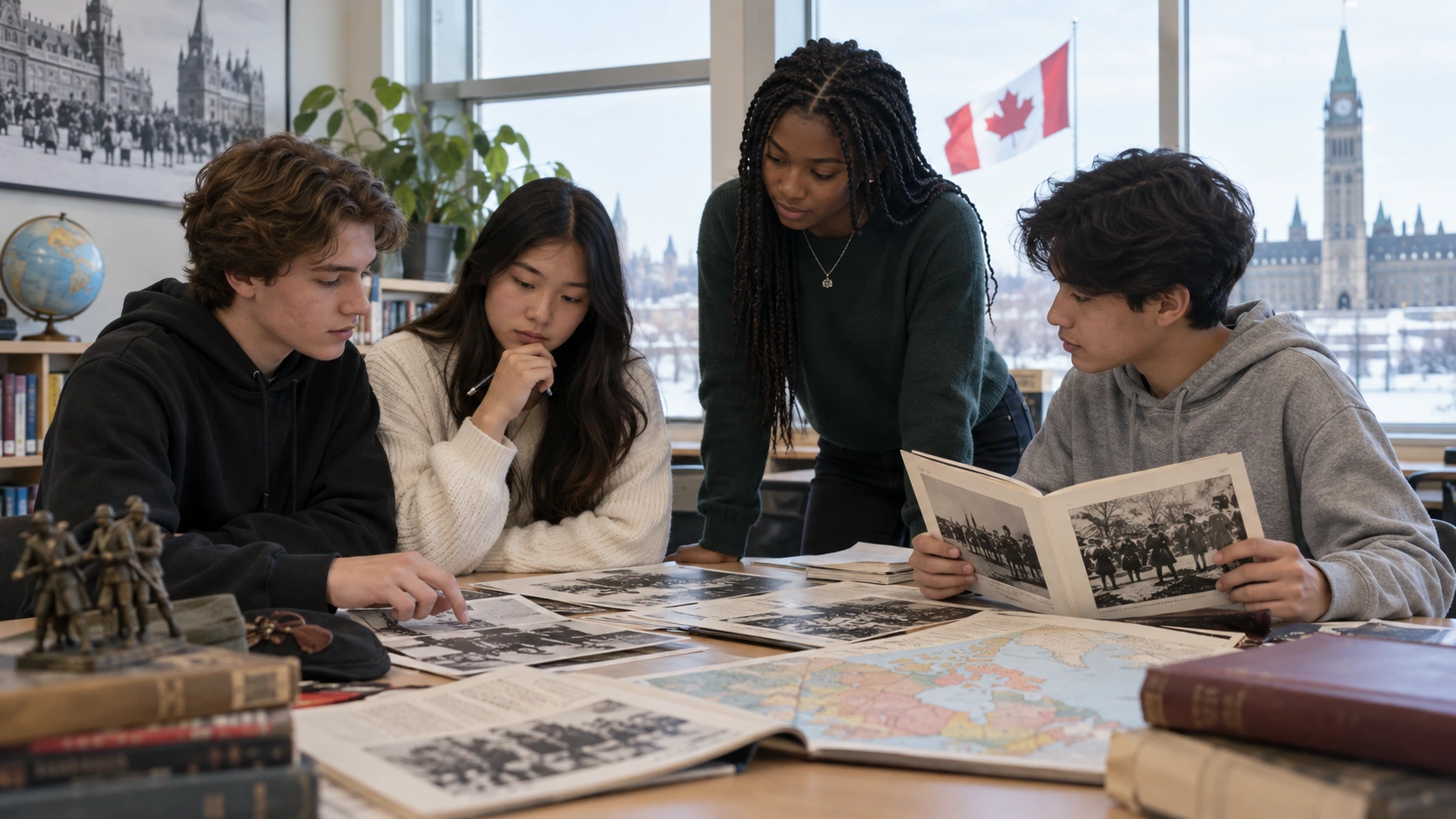
Description
This Grade 10 Canadian History course examines social, economic and political developments in Canada since 1914 and their impact on individuals, communities and national identity. Students use historical inquiry, evidence and the concepts of historical thinking throughout.
What You’ll Learn
- Use historical inquiry, evidence and the concepts of historical thinking.
- Examine Canada’s social, economic and political context from 1914 to 1929.
- Investigate the Depression, political ideologies, World War II, the Holocaust, the Holodomor and Canadian responses.
- Study postwar change, rights, Indigenous-Crown relations, Black Canadian activism, the Cold War and identity from 1945 to 1982.
- Examine constitutional change, reconciliation, diversity, global relations and contemporary Canadian identity from 1982 to the present.
- Analyze how communities, conflict, cooperation and major events shape identities, citizenship and heritage.
Skills You’ll Develop
- Historical inquiry and evidence evaluation
- Source analysis, corroboration and historical argument
- Historical significance, cause and consequence, continuity and change, and historical perspective
- Research, close reading, discussion and presentation
- Critical thinking about identity, citizenship, rights and public issues
Learning Outcomes
- Use the historical inquiry process and concepts of historical thinking to investigate Canadian history since 1914.
- Apply historical investigation skills in everyday contexts and identify related career applications.
- Assess key events, trends and developments from 1914–1929 and their significance for different communities.
- Analyze developments from 1929–1945, including interactions, conflict, cooperation, identity and citizenship.
- Analyze social, political and economic change from 1945–1982, including rights, Indigenous-Crown relations and changing identities.
- Analyze developments from 1982 to the present, including reconciliation, diversity, global relations and contemporary identity.
- Interpret and communicate conclusions using relevant historical evidence and multiple perspectives.